
Loading...
Loading...
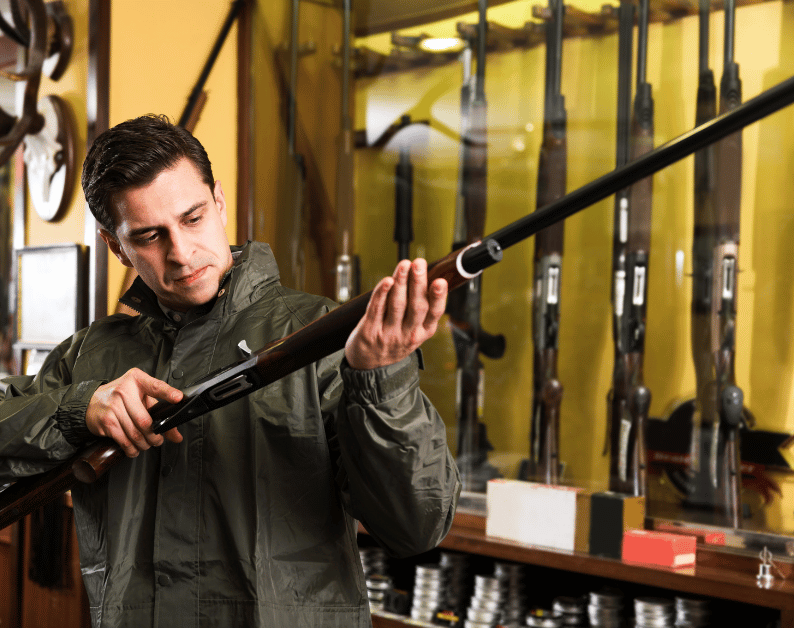
Selecting the right rifle is a significant decision for anyone interested in shooting, hunting, or sport shooting. With so many models available, each with unique features and purposes, finding the rifle that fits personal needs and preferences can feel overwhelming. Understanding different types of rifles, their mechanics, and intended uses can help clarify the choices and make the selection process more straightforward.
A rifle is a firearm designed to fire bullets through a rifled barrel, which has spiral grooves inside. These grooves cause the bullet to spin, stabilizing it in flight for greater accuracy and range. Rifles come in numerous styles and calibers to accommodate various shooting activities and target types.
Rifles are used for hunting large and small game, target shooting, competitive sports, and self-defense. The key to choosing a rifle involves matching the firearm’s characteristics to the user’s needs and shooting goals.
Rifles are generally categorized by their action type — how they load, fire, and eject ammunition. The main classifications are bolt-action, semi-automatic, lever-action, and single-shot rifles.
Bolt-action rifles operate by manually lifting and pulling back the bolt handle to eject a spent cartridge and then pushing forward and locking to chamber a new round. This process is repeated for each shot.
Semi-automatic rifles use the energy from the fired cartridge to cycle the action automatically, ejecting the spent case and chambering a new round. Shooters pull the trigger for each shot without manually operating the bolt or lever.
Lever-action rifles utilize a lever under the receiver to eject spent cartridges and chamber fresh ones by cycling the lever manually.
Single-shot rifles require manual loading of each round into the chamber, usually by opening the breach.
Before purchasing a rifle, several crucial aspects should be taken into account to ensure the firearm meets personal requirements.
Identifying the primary use impacts caliber, action type, and features. Hunting demands different capabilities than competition shooting or self-defense.
The caliber refers to the diameter of the bullet and influences power, recoil, and range. Common calibers for hunting vary from small (.22 Long Rifle) to large (.30-06 Springfield). Recoil tolerance and ammunition availability should align with the user’s comfort and goals.
Portability is important especially for hunters who trek long distances. Lighter rifles reduce fatigue but may increase felt recoil. Length affects maneuverability, particularly in dense environments.
Bolt-action rifles tend to offer the highest accuracy, making them favored for long-distance shooting. Semi-automatic rifles are excellent for closer-range rapid shots.
Simpler mechanisms usually require less upkeep. Consider the shooting environment and how rugged the rifle needs to be.
| Feature | Bolt-Action | Semi-Automatic | Lever-Action | Single-Shot |
|---|---|---|---|---|
| Operation | Manual bolt cycling | Automatic cycling | Manual lever cycling | Manual single loading |
| Rate of Fire | Slow to moderate | Fast | Moderate | Slow |
| Accuracy | High | Moderate to high | Moderate | High |
| Complexity | Simple | Complex | Moderate | Very simple |
| Maintenance | Easy | Requires regular care | Moderate | Very easy |
| Weight | Varies, often heavier | Moderate | Lightweight to moderate | Typically lightweight |
| Capacity | Usually 3-5 rounds | Varies, commonly 10+ | About 5-10 rounds | 1 round |
| Best Use | Hunting, precision shooting | Tactical, hunting, self-defense | Hunting, recreational shooting | Training, accurate single shots |
Finding the right rifle involves understanding the differences among popular types and reflecting on individual priorities. Bolt-action rifles bring precision and reliability for hunting and target shooting. Semi-automatics offer fast follow-up shots for dynamic scenarios. Lever-actions combine classic style with functional design, while single-shot rifles introduce simplicity and accuracy for beginners and enthusiasts.
By evaluating purpose, caliber, weight, and ease of maintenance, prospective buyers can confidently choose a rifle that enhances their shooting experience and meets their long-term needs.
Every shooter’s journey is personal, and the right rifle is one that fits seamlessly into their lifestyle, skills, and goals.