

Shotguns have long been a staple firearm for hunters, sport shooters, and those seeking reliable home defense options. Their unique combination of power, spread, and versatility makes them stand out among other types of guns. However, not all shotguns are created equal. Understanding the differences among the three most common types—pump-action, semi-automatic, and break-action—is important for anyone interested in owning or using one. Each type operates differently and offers distinct advantages that influence their best uses.
At its core, a shotgun is a firearm designed to fire multiple small projectiles or a single heavy projectile (slug) through a smoothbore barrel. Unlike rifles, which fire bullets designed for long-range accuracy, shotguns are optimized for close- to medium-range targets, making them particularly effective for bird hunting, small game, or self-defense.
What differentiates one shotgun from another is primarily the mechanism used to load, fire, and eject shells, impacting factors such as speed, reliability, and ease of use.
The pump-action shotgun is perhaps the most recognizable type. After firing, the shooter pulls back and then pushes forward on a sliding forearm grip. This manual movement ejects the spent shell and loads a fresh round into the chamber from the magazine tube beneath the barrel.
This action requires coordination and timing but offers a tactile sense of control that appeals to many shooters.
Gun owners use pump-action shotguns in diverse settings such as:
Semi-automatic shotguns reduce the physical work on the shooter by using energy generated by each shot to automatically eject the spent shell and chamber the next. This cycle can happen through gas-operation, where some gas from firing moves parts of the mechanism, or through recoil-operation, where the recoil itself drives the cycling.
This system requires only a pull of the trigger for each shot without manual cycling.
Semi-auto shotguns tend to:
These shotguns are commonly found in:
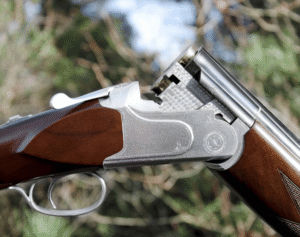
Break-action shotguns feature a hinge that allows the barrels to “break open,” exposing the chamber(s) for manual loading of one or two shells directly into the barrel(s). After firing, the user opens the gun again to eject spent shells and reload.
There are two primary types:
Break-actions are frequently used in:
| Feature | Pump-Action | Semi-Automatic | Break-Action |
|---|---|---|---|
| Operation | Manual cycling with forearm pump | Automatically cycles using gas or recoil | Hinge opens for manual loading |
| Reload Speed | Moderate to fast | Fast | Slow |
| Mechanical Complexity | Simple mechanics | Complex internal mechanics | Very simple mechanism |
| Reliability | Extremely reliable in all conditions | Reliable but can jam depending on ammo | Highly reliable with minimal failures |
| Maintenance | Easy maintenance | Requires regular cleaning and care | Very easy to clean and maintain |
| Typical Capacity | 4 to 8 rounds | 3 to 8+ rounds | Usually 1 or 2 rounds |
| Recoil Management | Moderate to high recoil | Often less recoil due to design | Moderate recoil |
| Price Range | Generally affordable | Usually higher cost | Varies widely, from affordable to premium |
| Ideal For | Hunting, home defense, law enforcement | Competitive shooting, hunting, tactical use | Sporting clays, upland hunting, collectors |
A shotgun is much more than a tool; it is a trusted companion tailored to specific shooting needs. Each type — pump, semi-automatic, and break-action — offers distinctive qualities that suit various scenarios. The pump-action’s ruggedness and adaptability make it a dependable option for many; the semi-automatic’s speed and reduced recoil appeal to those seeking performance and follow-up shots; the break-action’s simplicity and elegance charm traditionalists and sport shooters.
Choosing the right shotgun involves weighing factors such as how you plan to use it, how involved you wish to be with maintenance, and your budget. By understanding the operational differences and benefits of each type, shooters can make informed decisions that enhance their experience and satisfaction in every shot.
Shotguns remain an essential firearm category with a bright future, maintaining relevance through their diverse models and enduring appeal.